Dr Nicholas Baidoo
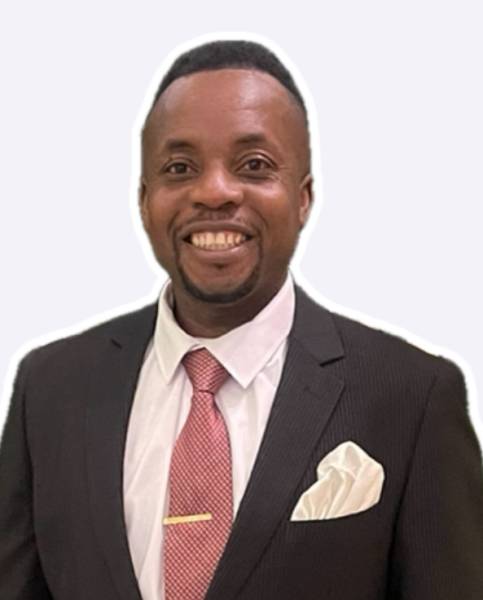
Dr Nicholas Baidoo is a Health and Care Professions Council (HCPC) registered Biomedical Scientist specialising in Histopathology and a Fellow of the Institute of Biomedical Science. He has more than 18 years of professional experience across the healthcare and research sectors. He holds an MSc in Biomedical Science from London Metropolitan University and a PhD in Biochemical Sciences from Roehampton University, London. Following the completion of his doctoral studies, he was awarded an Honorary Research Fellowship at Queen Mary University of London.
Throughout his career, Dr Baidoo has been actively involved in the education, training and professional development of biomedical science graduates, supporting their progression towards HCPC registration in Cellular Pathology. His extensive experience spans over 30 healthcare organisations in the United Kingdom and internationally, where he has undertaken a variety of specialist roles in pathology and laboratory medicine.
Dr Baidoo has worked at several leading healthcare and research institutions, including the Francis Crick Institute, where he was part of the Experimental Histopathology Research Laboratory; the Robert Jones and Agnes Hunt Orthopaedic Hospital; and the Institute of Liver Studies at King’s College Hospital, among others. These roles have enabled him to develop extensive expertise in diagnostic histopathology, translational research and laboratory practice.
His interest in research began during his postgraduate studies, where he investigated the effects of grape-derived polyphenols on the MDA-MB-231 breast cancer cell line. He subsequently worked as a Senior Research Scientist in Experimental Histopathology at the Francis Crick Institute, providing specialist technical expertise and research support to multidisciplinary teams while contributing to the training and development of researchers and laboratory staff.
Dr Baidoo’s current research focuses on the application of histological, molecular and cellular techniques to investigate age-related changes in the human gastrointestinal tract. His work examines how ageing affects the structural organisation, cellular composition and extracellular matrix of the gut wall, contributing to a greater understanding of gastrointestinal health and disease across the lifespan.
At the University of Westminster, Dr Baidoo is Co-Course Leader for the PgCert Genomics in Histopathology and PgCert Genomics in Haematology programmes. He is also Module Leader for Professionalism and Skills in Biomedical Science and Co-Module Leader for Cellular and Molecular Pathology. Through these roles, he is committed to delivering high-quality, research-informed teaching and supporting the development of future biomedical scientists and healthcare professionals.
Dr Nicholas Baidoo (BSc, MSc, PGCertHE, PhD, MRSB, FIBMS, FHEA) research work focuses on the cellular and molecular mechanisms underpinning ageing within the human gastrointestinal tract. As life expectancy continues to increase, age-associated lower bowel disorders, including chronic constipation, faecal impaction and faecal incontinence, have become major clinical and public health concerns. These conditions affect millions of older people and can lead to chronic pain, social isolation, reduced independence and significant healthcare costs.
Dr Baidoo's research seeks to understand how ageing alters the structural and molecular organisation of the gastrointestinal wall and how these changes contribute to bowel dysfunction in later life. His work investigates the role of key cellular populations within the intestinal microenvironment, including epithelial cells, stem cells, immune cells, fibroblasts, smooth muscle cells and components of the enteric nervous system. By examining age-related changes in these cells and their interactions with the extracellular matrix, he aims to identify mechanisms that may underpin the development of gastrointestinal disease and functional decline.
His research employs a range of histological, immunohistochemical, molecular and imaging techniques to characterise structural alterations in human gastrointestinal tissues. Through the analysis of human colonic samples, he investigates age-related changes in tissue architecture, collagen deposition, extracellular matrix remodelling, cellular signalling pathways and regenerative capacity. A key aspect of his work is the development and application of systematic, reproducible methodologies that enable robust assessment of ageing-related changes in gastrointestinal tissues.
Dr Baidoo also has a strong interest in translational and clinical research, seeking to bridge the gap between laboratory discoveries and improvements in patient care. His work contributes to a growing understanding of how age-associated changes in the gastrointestinal tract influence disease susceptibility, tissue repair and functional outcomes. Ultimately, his research aims to support the development of evidence-based interventions that promote healthy ageing, preserve bowel function and improve quality of life for older individuals.